Friday, December 5, 2008

Weekly High Five #24

I cannot believe that this year is almost over.

So much has happened in what feels like a very short time.  Adele and I have had a helluva ride this year and I reckon that adventure is not over just yet.  There is always more!

As soon as I have finished this High Five we will be heading back to Madikwe to start the 'silly season'.  This will be the sixth year running that we will be working over Christmas and New Year.  It has been a while since we got to spend the festive season with family but at least we have each other, good friends and a very busy time ahead so I suppose it is not all bad.

On a certain level I am looking forward to getting away from the city and all the drama that sometimes go along with it.  It feel that the slightly heightened emotions and more time on people's hands during this time of year only leads to confusion, overly dramatic statements and things then get said that, if everybody just slowed down and thought about it for a second, could have been avoided.  We all have our own experiences, opinions and ideas on life and the beautiful balance of family and friendship come from accepting people for who they are, learning from each other and embracing the differences.  

Photography has for a long time now been an outlet for me and by capturing images and going through the entire process of editing and scrutinizing my own work I have not only learnt a lot about my own photographic progress but also found the head space to work through other people's issues.  Anyway... moving swiftly along!

I have uploaded more than 100 new images to the Photo-Africa Stock Library so make sure to stop in there to see more of my and the other contributing photographer's recent work.  This week's images is again pretty diverse so here goes with this week's High Five!

Image 1 - Proud Male Lion by Gerry van der Walt

This image was taken on a slightly overcast day but this diffused light does not really detract from the proud attitude the lion is showing.   The road he is laying on creates a nice pathway for your gaze to enter the image from the top.  I also noticed how the little purple flowers just right of his face catches your eye and this then leads you to the nasty injury on his cheek.  How did it happen?  What is he looking at?  Any image that can make you ask questions works.  

* * * 

Image 2 -  Springbok in Grass by Gerry van der Walt

Background, background, background.  Yes, this is an image that is suppose to highlight and show the Springbok but the background of grass makes it work.  The natural canvas that gets created by the streaky wisps of grass give the image texture and places the animal in it's natural environment.  Very simple composition that works purely because of the background.

* * * 

Image 3 - Digital Art:  Elephant Eye by Gavin Tonkinson

As a large, stretched canvas print this would be absolutely stunning.  Based on this image, the original was perfect in capturing the elephant's eye.  Crisp and perfectly placed within the frame.  The circles that is created by the elephant's skin feels like it draws your view in towards ultimately making eye contact.  I would love to see the original, unedited image but absolutely love this digitally edited version.  Awesome capture and great edit.

* * * 

Image 4 - Cactus Landscape by Gerry van der Walt

This Namibian landscape is another very simple composition that uses basic guidelines to highlight the cactus in the front of the scene.  The rule of thirds comes into play twice.  The first is the placement of the cactus on the bottom right power point and in the second instance the diagonal line at the top is almost a third down from the top.    This kind of image, with diagonal lines, feels like you should look at it from left to right which also leads your gaze naturally to the focal point in the front.  The late afternoon light on the cactus, combined with a shallow DOF makes the cactus stand out by making it 'pop' out of the images.  Beautiful image of an unbelievable landscape.

* * * 

Image 5 - Sleeping Lioness in Black & White by Gerry van der Walt

In my opinion a black & white image is always hit or miss.  There is very seldomly an in between.  In too many instances people shoot away with reckless abandon and when they check their images afterwards they convert the so-so images to black and white to hide exposure flaws and give it more punch.  It is a skill to create striking black & white images.  Understanding the Zone System does help and when you are able to combine this with strong composition you have all the tools to create a beautiful work of art.  The above image shows great contrast without taking the focus away from the lion's paw which is the focal point.  The zones, which ranges form pure white to pure black, are almost all included yet it does not feel like they are competing with each other.  The original image can still stand up and hold it's own based on colour and composition but I prefer this black & white version and because of that it's my pick of the week.

* * * 

I would love to hear your thoughts and feedback on these images.  During the next few busy weeks I will do my utmost to keep the posts on the Blog coming and I am sure that with being out in the field almost everyday the Photo-Africa photographers and I will all be able to get some great images.

I am also going to do my best to get back to Supingstad to try and do more portraits of the people in the local community and also look at expanding my Hospitality and Lodge portfolio which I will feature on the Blog in the next few weeks.  (I have already loaded a few to the new galleries on my page on Photo-Africa so pop in there as well when you get a chance!)

Before I go, for those of you who use who gets excited when you hear D3x - click here!  Wow!!

As always I look forward to hearing from you.

Until next time.

Images from Tuningi Guests

As you might imagine, photography forms a very integral part of any trip to a Game Reserve in Africa.

As I receive them, I will be uploading and showing a few of the images that some our guests at Tuningi took during their stay in Madikwe.  It is great to look back at these images and remember the sightings and all the discussions about photography, what to look for in wildlife images and how the pictures were taken. Remember that none of these images were taken by a 'professional' but by people with a keen interest in photography during their stay in Africa. 

Here are a few images that John and Andrew took during their separate stays at Tuningi.

Zebra in Madikwe (Andrew)

Elephant playing in Mud (Andrew)

Leopard - Awesome image and sighting! (Andrew)

Giraffe Necks (John)

Following lions in the vehicle. (John)

Discussing the days photography around the Bar.  (John)

Some nice images and great memories.

If you have visited Tuningi or any other lodge in a Game Reserve in Africa you can email me a few of your images along with details on the lodge and I will post them along with links to the lodge and your own site on the Blog.

As always I look forward to hearing from you.  I will be posting the Weekly High Five soon.

Until next time.

Thursday, December 4, 2008

Light - That Extra Fizz

According to various definitions photography is a term which comes from the Greek words "photos" (light) and "graphos" (drawing). Drawing with light.  A photograph is made with a camera by exposing film to light in order to create a negative. The negative is then used in the darkroom to print a photograph (positive) onto light-sensitive paper.

Notice how many times the word 'light' comes up in that description?  

Light is probably one of the most important factors when shooting nature and wildlife.  I would rather shoot an abstract of an old tree in the beautiful golden light of early morning than a lion at midday.  Does not sound as exciting but when you go and look at your images and you are very honest with yourself you will be able to see and acknowledge the difference.  

Many people who go on safari for the first time get so excited about seeing a lion or elephant for the first time that they fill up a 4GB flash disk in a matter of minutes.  This is important to get it out of your system but once that initial shooting frenzy is over, take your time to look at the light and how best to use it.

As I was working through my images form the last few months I came upon these two that shows how light can give an ordinary scene that little extra fizz!  Kind of like drinking a Coke with no bubbles.  That 'fizz' gives it that little extra!

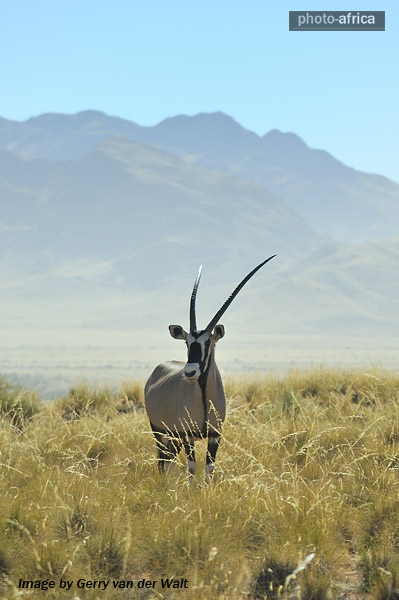
This image of a Gemsbok was captured in the Namib Rand Nature Reserve.  It was around 8:30 in the morning and the sun was almost getting too harsh to keep on photographing wildlife.  As we got to camp this beauty presented itself and everything just looked right.  By this time we must have seen and photographed at least 50 of these majestic animals but this time it was right.  The way that the light bounces of the dark body and horns, the shine of it's coat and the way in which the morning light was playing in the grass made for a great combination of small things that added up to a great wildlife image.  The animal itself was not necessarily doing anything mind blowing, but when shooting wildlife you have to look deeper than that.  What is the light doing and even more importantly, what is the light going to do?

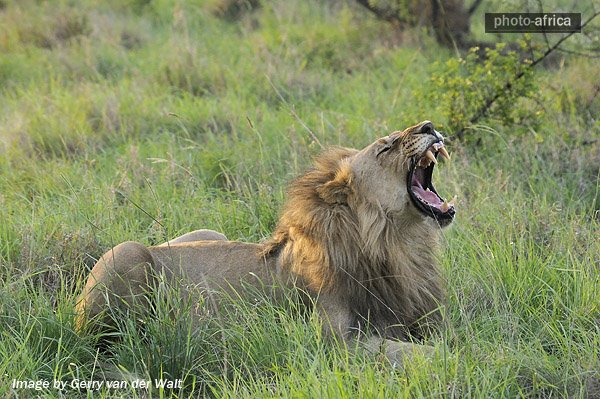
This is another pretty standard wildlife image.  The late afternoon light makes it just that touch better.  You can see how the warm light gives a little bit of life to the grass and highlights the mane of this young lion.  In the perfect world he would have been looking the other way but nothing you can do about that!  Normal picture with just a touch of golden light.  

Next time you go on safari make sure to check the light.  What time does the sun come up?  Where?  Are there clouds?  Can I use them?  

Lots of questions but this makes the entire photographic journey so much more interesting and the results will show in your images.

On a different note I was at Universal Image in Cresta Centre this morning.  This is where I do all of my printing (thanks Elliot!!) and get all my photographic equipment from  While I was there this morning they were busy putting the final touches on the one of the first Nikon Pro Centres in Gauteng.  Very exciting and I will definitely be back there as soon as I get back from Madikwe in early January.  Some very impressive equipment, lenses and technical support so if you are in Johannesburg and you have a moment stop in and check out the awesome range!  And you have to try the D3... it is FAST!  Maybe one day... :)

Before I go.  I have been using Adobe Bridge CS4 for the last few days and have been really impressed.  The interface is easy and it's quick.  Compared to all the previous versions this is definitely a step in the right direction.  For the last few months I have been using FastStone Image Viewer to navigate and look through images as it is quick and very simple to use.  I reckon that once you have setup you user interface in Bridge CS4 it will beat FastStone for speed and features any day of the week.  I was a bit skeptical before but am very glad I made the change as it feels like my whole work flow has been streamlined!  If you have used CS4 I would love to hear your thoughts.

Anyway, time to get going.  Have to upload a few more galleries to my page on Photo-Africa before Adele and I head back to Madikwe. 

As always I look forward to hearing from you!

Until next time.

Top Ten Wildlife Photography Tips

While doing some Google searches I found quite a few websites that offer hints and tips to becoming a better wildlife photographer.   I know that if you ask a hundred people the same question you will get a hundred different answers but I like these particular ones.  Simple and straight to the point.

Here are the top ten tips I found on Picture Correct (all round great site with some nice reading)  that I quite liked and some links to posts I have done in the past that kind of pics up on these points.  
  1. Miss the eyes and you have missed the shot  (Click here for my version)
  2. Use a telephoto lens  (Click here for my version)
  3. Use a wide aperture
  4. Adjust your shutter speed to stop/show the action
  5. Use a flash to fill in shadows
  6. Plan for the best light   (See next post!)
  7. Composition - Framing your shot  (Click here for my version) (And here for another one)
  8. Shoot with two eyes
  9. Anticipate behavior  (Click here for my version)
  10. Use a tripod
  11. Extra - Shoot, shoot, shoot!
Pretty to the point tips.  To read the full version of all these tips on Picture Correct click here.

As always I look forward to hearing from you!

Until next time.

Photo-Africa Photographer: Riaan Kruger

Ran is currently working at Royal Madikwe in the Madikwe Game Reserve.

 - When did you start taking photos?
Round about 2000.

 - Film or Digital?
I first shot film in 2000 and then changed to digital in 2006.

 - What equipment are you currently using?
Nikon D50 with 80mm and 300mm Nikon Lenses

 - Thoughts on Photoshop and post processing of images?
I enjoy enhancing some aspects in a picture but try and limit editing as much as possible.  Taking pictures is the art and not to manipulate them.  Sometimes you have to manipulate though as with moving or action photography you only het one chance.

 - Favourite subject to photograph?
Difficult to choose one but definitely any elements of nature.

 - Place in the world you still want to photograph?
Indian tigers, Mountain Valley, Lake Malawi and definitely the Okavango Delta and the Big Migration in the Serengeti.


To view more of Riaan's images on the Photo-Africa Stock Library, click here.

* * * 
As always I look forward to hearing from you.

Until next time.

Wednesday, December 3, 2008

Photo-Africa Photographer: Craig Muller

"My passion for photography is fuelled by the awesome beauty of Africa.  As a South Africa, I think it is a love affair we are born with, Africa is in our blood!  My goal is yo use my photographs to show the world how dynamic African life is.  I hope my photographs leave you feeling they are worthwhile viewing."  Craig Muller 

 - When did you start taking photos?
I started taking photos in 2005 when I was given a Canon EOS 300D as my 21st gift - The best present I have ever been given.  

 - Film or Digital?
Digital.

 - What equipment are you currently using?
Canon 300D with kit 18-55mm lens, Sigma 170-500mm lens, Canon EOS 40D and Sigma 10-20mm lens along with a Manfrotto Mono and Tripod.

 - Thoughts on Photoshop and post processing of images?
I have not really ventured into the world of Photoshop and post processing except for the usual level adjustments, contrast, etc.

 - Favourite subject to photograph?
Definitely nature - over and over again, although I really enjoy sports photography.

 - Place in the world you still want to photograph?
Most definitely the Northern Lights and Arctic Circle.  Also on the list is the dramatic and varied landscapes of New Zealand.


To view more of Craig's images on the Photo-Africa Stock Library click here!

* * * 
As always I look forward to hearing from you.

Until next time.

Working a Scene

One of the challenges in wildlife photography is to try and 'work' a scene to create different angles and use whatever light you have to create striking images.  As you are dealing with animals who, most of the time, do not want to play along this is not always possible and you have to deal with the situation and make the best of what nature presents you with.

During our recent road trip to Namibia I had quite a bit of time to play around with different scenes and when I was working through the raw files liked the comparison of the images I got at one particular scene in Helmeringshauzen.

Just outside the hotel, which was absolutely phenomenal, we stopped at there was a scene that was just begging to be photographed.

This old car and lead tree as you would, I suppose, normally photograph them.  Pretty straight forward.

During the afternoon and next morning I played around with various shots of the same scene.  Below are a few of the variations I was able to get during our short stay in Helmeringshauzen.

Same shot as the first one but just made into a very simple sepia.  (Yes - a simple change in CS4.  Check previous Blog about editing digital images.)

Changing angle and using a little bit of flash gave me this result.

As the sun disappeared I used my beanbag and LiveView on the D300 to meter of the bright light through the vehicles grill and got this silhouette.

I got this image, probably my favourite, the next morning as the sun was breaking the the horizon.  The orange glow on the fence and the texture on the vehicle body made this an interesting shot to shoot but I quite like the result.

Can you imagine the images you would be able to get if the mammals and birds would allow you to 'work the scene' when you find them in the bush?  For now I guess we just have to think on our feet and fire away!

As always I look forward to hearing from you.

Until next time.

Photo-Africa Photographer: Neal Fischer

Neal is currently working at Kukama Lodge in the Madikwe Game Reserve.

 - When did you start taking photos?
At about 25 years of age.

 - Film or Digital?
Film.

 - What equipment are you currently using?
Canon 350D with 17-55mm lens, 70-300mm Sigma Macro lens

 - Thoughts on Photoshop and post processing of images?
Personally I do not touch up any of my photos but if it is done in a natural way it is ok.

 - Favourite subject to photograph?
A place in Australia called the Kimberlies

 - Place in the world you still want to photograph?
Kolmanskop, Namibia and the Democratic Republic of the Congo (as a subject both worn torn and beautiful.)


To view more of Neal's images on the Photo-Africa Stock Library click here!

* * * 
As always I look forward to hearing from you.

Until next time

Tuesday, December 2, 2008

Photo-Africa Photographer: Matt Jones

"I live and work in the Marico bushveld, a place which grows on you, to the point where your heart feels rest and peace only in this wonderful place.  I enjoy taking photos of moments of time in this great place and sharing it with people the way I see the bush.  I hope you will fall in love with nature and our back yard as we have."  Matt Jones

 - When did you start taking photos?
From about 12 -13 years old, my old man gave me a camera, as the saying goes a "mik en drik". But it was a start.

 - Film or Digital?
Film captures colour wonderfully and it is still something special, I still carry my old slide film camera with me for those shots digital can't do Justice. 85% of the picture in my house are from slide photos. Digital has given the average guy a chance at photography. With film you had to wait for the shop to finish with your pics, to see if you had it right on the day; digital is well...digital. Digital has opened a world of self teaching, and with a little playing around with your camera; you can get some great shots. Film you had to wait for your shot, prefect timing- patience; digital some guys use motor drive and some where in the pics you will get a few good ones. I think it is good to have one foot in old school and one in the new.

 - What equipment are you currently using?
Canon 20 D, EOS 300 - Slide, Canon 75 - 300mm, Canon 25 - 80mm

 - Thoughts on Photoshop and post processing of images?
Just like the discussion on Film or Digital, I think this is the same. My feelings - I try to capture the image right fist time, that is knowing your equipment. It is special to sit back and look at a photo, and nothing was done to it. Do I use Photoshop? Yes, I think it is a great tool; I use it on pics I want to play with - more for my own interest to see how it turns out.

 - Favourite subject to photograph?
Moments in time, those little moments that come by and make an impact on your life. A sunset which touches your soul, a thunder storm which installs awe, a kudu drinking water - giving peace as you watch. I want to look back at the photos and remember those moments that came by; long after I forgot.

 - Place in the world you still want to photograph?
I traveled for a few years and the experiences I had was out of this world. I would like to travel again, were ever you go - take photos. You see the world differently with your camera, not constantly through the view finder but with an eye of perception. Moments in time.


To view more of Matt's work on the Photo-Africa Stock Library click here!

* * *
As always I look forward to hearing from you.

Until next time.

Should You Manipulate or Alter Your Digital Images?

Having spent quite a bit of time browsing through magazines and various websites the last while, this question keeps on popping up and there does not seem to be any 'civilised' agreement about the answer.


Should you 'Photoshop' or 'alter' your digital images?

Why should this be such a contentious issue?   Whether for a crop or a full edit it is the final process of a digital shoot just a film was processed in the darkroom when we were all still using film cameras.  

Do I edit my images?  Absolutely!  I believe that if you want your work to stand out you need to not only have an eye for light and composition but also be able to take the process further by editing and processing your own images in a professional manner. 

The Photographic Society of South Africa (PSSA) recently published the following:

* * *

Digital manipulation is an accepted part of photography.  The original image must have been made by the exhibitor on a recognized camera and all modification of that original must be made by the exhibitor or under his personal directions.  For the purpose of telling a true story (not manipulated), images of Nature, Photojournalism and Photo-Travel may not be manipulated.

The following will not be considered as digital manipulation:
a) Removal of dust and scratch marks.
b) Adjustment of exposure and contrast.
c) Adjustment / correction of the color balance.
d) Application of color saturation.
e) Reduction of digital noise.
f) Sharpening of the image.
g) Cropping and resizing is permissible.

* * * 
I feel that editing and post-processing is a part of the larger art form that is photography.  I do feel that by sticking to the above 'guidelines' you will be able to not be altering your image but refining it and completing the entire artistic process. 

I am currently using Capture NX2 to sort and edit my RAW files.  Sometimes I mights  use FastStone Image Viewer to quickly look through images but not for editing.  (Great little program and it's free!)   After that I might, depending on the desired result and use of the image, run the files through Photoshop CS4.  I have added various filters which I find extremely useful.  These includes Viveza, Color Efex Pro 3 and Sharpener Pro all from Nik Software.  Really easy to use and great results!

So there you go.  My thoughts on this ,apparently, very touchy subject.  It is a part of the entire process and something that can only, if done correctly, lift your images to that next level!

As always I look forward to hearing from you!

Until next time.

A Few Random Images

It is great to have the time to sit and work through your images.  I do not always have this amount of time to sit and enjoy the process but the last few days have been great fun!

I have been catching up on numerous wildlife images from the beginning of October, our road trip to Namibia and the last two weeks in Madikwe.  Some great stuff and as I finish the images I am uploading them to the Photo-Africa Stock Library.

There are many, many more to come, but here are a few of the ones I have enjoyed.

This is Grant taking pictures of the two Sereti males when we found them a week or so ago.

I have not had too many chances to get good images of these little guys, but on this particular morning this Scrub Hare was out late.  They are normally nocturnal but this particular morning was overcast and very misty which gave us great opportunities to photograph him.

Interesting result.  I focused on the grass in front of the female lion exactly as she yawned.  The light was pretty tough to contend to as it was slightly hazy with scattered patches of sunlight.  Still like the image though!

Nice family portrait.

This image was shot full frame and shows why I absolutely love photographing Rhino.  The offer a beautiful combination of straight lines, curves and contrasting colors.  Great subjects when you visit Africa!

* * * 

In the next few weeks I will be posting a 'feature' on the various contributing Photo-Africa photographers.  In each of these posts I will show a few of their images from the Stock Site and also their answers to the following questions:

 - When did you start taking photos?
 - Film or digital?
 - What equipment are you currently using?
 - Thoughts on Photoshop and post processing of images?
 - Favourite subjects to photograph?
 - Place / subject in the world you still want to photograph?

I thought it would be an interesting exercise to see what the differing approaches and thoughts are.  I will start posting these features later today and will keep them coming as I receive the answers from all the photographers.  

If you are a photographer, whether wildlife or otherwise, it would be great to hear your thoughts on these questions as well and would love to post your thoughts and images as well.  Email me with your thoughts and images if you would like to feature your work and website!

As always I look forward to hearing from you.

Until next time.

Monday, December 1, 2008

Latest Published Images

I am in the process of working though all my own images from the last two months and have already started uploading some of these to the Photo-Africa Stock Library with a whole lot more to come in the next few days.  I will post some of these images to the Blog as well so check back again soon.

In the meantime here are two of the latest images from Photo-Africa that will be published in magazines and used in marketing campaigns around the world.


Should you wish to use any images on Photo-Africa for editorial, commercial or personal use please do not hesitate to contact me.

As always I look forward to hearing from you.

Until next time.